
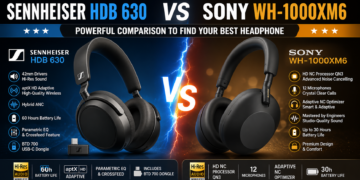


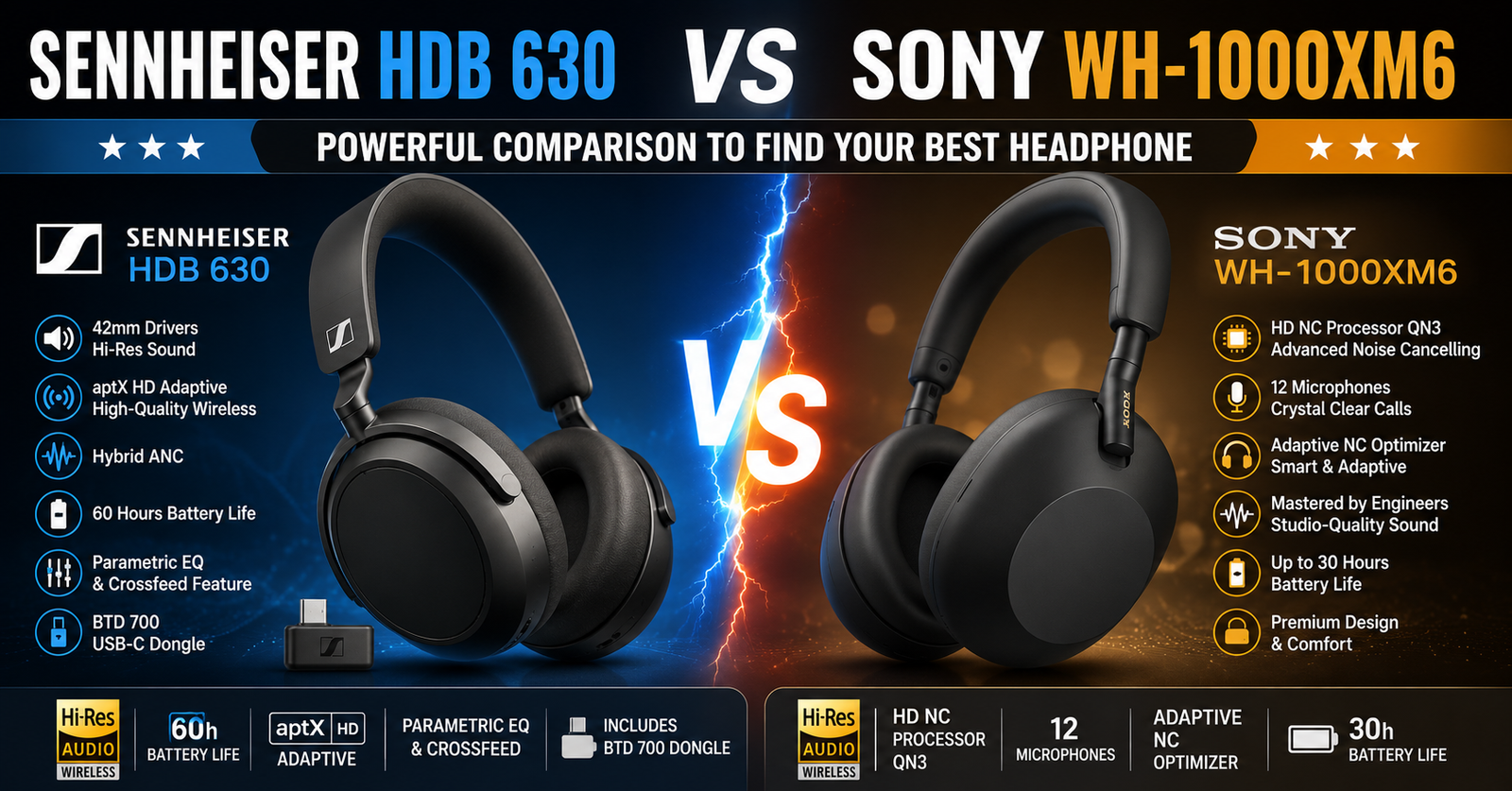

Sennheiser HDB 630 vs Sony WH-1000XM6 — two of the most talked about premium wireless headphones right now and genuinely two very different takes on what a great headphone should be. I have gone through both in detail — specs, real-world reviews, ANC performance, sound tuning, and battery — and I want to give you a clear picture of which one actually makes sense for you.
Because here is the thing. Both are excellent. But they are excellent in completely different ways. And picking the wrong one for your use case is a mistake you will notice every single day.


🎧 Note: Both headphones are available on Amazon. Check the link at the end of this post for current pricing.
Sennheiser HDB 630 vs Sony WH-1000XM6 – Full Comparison
Quick Specs – Side by Side
 Audiophile tuning Sennheiser HDB 630 | VS | 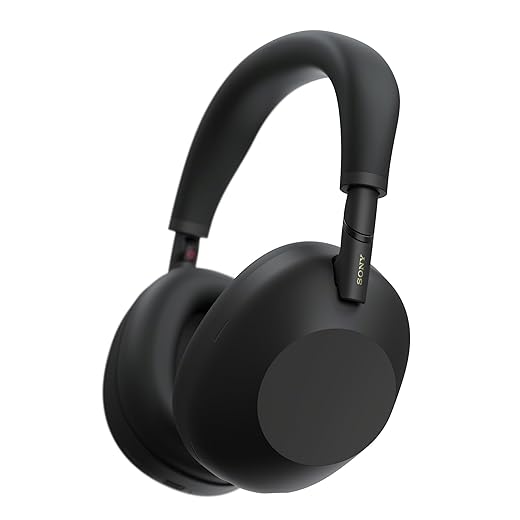 Best‑in‑class ANC Sony WH‑1000XM6 |
|---|---|---|
9.5/10 | Sound quality |
9/10 |
9/10 | Noise cancelling |
9.7/10 |
Up to 60 hours | Battery life (ANC on) |
Up to 30 hours |
SBC, AAC, aptX, aptX HD, aptX Adaptive | Bluetooth codecs |
SBC, AAC, LDAC, LC3 |
On‑head parametric EQ + crossfeed in Smart Control Plus | Tuning tools |
10‑band EQ, presets & Game EQ in Sony | Sound Connect |
≈311 g | Weight |
≈254 g |
Critical listening & hi‑res sources (dongle, USB‑C, analog) | Best for |
Commuting, travel and max noise cancelling performance |
| Check latest price | Check latest price |
| Spec | Sennheiser HDB 630 | Sony WH-1000XM6 |
|---|---|---|
| Drivers | 42mm dynamic moving-coil | 30mm Neodymium + carbon fiber dome |
| ANC | Adaptive ANC | HD NC Processor QN3, 12 microphones |
| Battery (ANC on) | 60 hours | 30 hours |
| Bluetooth | 5.2 | 5.3 |
| Codecs | aptX Adaptive, aptX HD, aptX, AAC, SBC | LDAC, AAC, SBC |
| Hi-Res | 24-bit/96kHz (aptX Adaptive or USB-C) | LDAC + DSEE Extreme |
| Dongle Included | Yes — BTD 700 USB-C | No |
| Frequency Response | 6Hz–40kHz (wired/USB-C) | Up to 40kHz (LDAC) |
| Weight | 311g | 254g |
| Parametric EQ | Yes + Crossfeed | Standard EQ only |
| Microphones | Not specified | 12 mics (6 ANC + 6 beamforming) |
| Foldable | No | Yes |
| Water Resistance | None rated | None rated |
| Colours | Matte silver/black | Black, Midnight Blue, Platinum Silver |
Sound Quality – This Is Where They Diverge Most
This is the most important section in the Sennheiser HDB 630 vs Sony WH-1000XM6 comparison — and the one where the two headphones go in completely opposite directions.
Sennheiser HDB 630 – Audiophile Neutral Tuning
Neutral hi‑res tuning with 42 mm drivers, parametric EQ & 60h battery
Sennheiser HDB 630 closed‑back wireless headphones with in‑house 42 mm dynamic drivers tuned for neutral, hi‑res sound, aptX HD/Adaptive support via Bluetooth 5.2 and bundled BTD 700 USB‑C dongle, hybrid adaptive ANC and up to 60 hours of battery life.
The HDB 630 is tuned neutrally. That means it reproduces audio as accurately and faithfully as possible — no boosted bass, no exaggerated treble, no colouration. What is in the recording is what you hear.
Reviewers consistently describe it as having clarity, spaciousness, and detail that audiophiles actually notice — with one prominent audio publication stating it is cleaner, more dynamic, and more natural-sounding than the AirPods Max, Bose QC Ultra, Sony WH-1000XM6, and even the Focal Bathys. The 42mm drivers deliver lifelike mids, precise detail, and an expansive soundstage that is simply not what most consumer-focused headphones aim for.
The frequency response stretches to 40kHz over wired or aptX Adaptive — true hi-res territory. Total harmonic distortion is below 0.2% at 100dB SPL which is technically impressive. This is a headphone that people who own dedicated DACs and amplifiers will recognise as a serious piece of audio equipment — just in wireless form.
Sony WH-1000XM6 – Consumer-Tuned Vocal Clarity
Flagship ANC with HD NC Processor QN3, 12 microphones and LDAC
Sony WH‑1000XM6 over‑ear wireless headphones with HD Noise Cancelling Processor QN3 (7× faster than QN1), 12‑microphone adaptive noise cancelling system, LDAC hi‑res wireless audio, DSEE Extreme upscaling and up to 30 hours battery with ANC on.
The Sony WH-1000XM6 is co-created with mastering audio engineers and tuned for vocal clarity and balanced listening — but it is not neutral in the audiophile sense. It is tuned to sound good to most people immediately. Rich vocals, balanced frequencies, and a presentation designed to work across genres without fatigue.
The carbon fiber dome driver unit is a meaningful hardware upgrade over previous XM series models — Sony changed the actual drivers to focus on vocal clarity and extend high-frequency reproduction. LDAC codec support allows high-resolution wireless streaming that reaches up to 990kbps — the highest bitrate Bluetooth codec currently available, exceeding aptX Adaptive in bitrate (though not necessarily in real-world latency performance).
DSEE Extreme AI upscaling restores compressed audio closer to original quality in real time — useful for Spotify and Apple Music streaming where files are not lossless.
Sound verdict: Audiophiles and detail-oriented listeners will prefer the Sennheiser HDB 630. General consumers, vocal music lovers, and people who stream from standard services will enjoy the Sony WH-1000XM6 more immediately. The Sennheiser HDB 630 vs Sony WH-1000XM6 sound quality debate genuinely comes down to neutral accuracy vs pleasing consumer tuning.
Active Noise Cancellation – The Sony Wins Here
Sony built its reputation on ANC. The WH-1000XM6 carries that forward — and improves it significantly.
The HD Noise Canceling Processor QN3 is 7x faster than the QN1 found in the WH-1000XM5, optimizing 12 microphones in real time for superior noise cancellation, sound quality, and call clarity. The result is ANC that reviewers consistently describe as the best available in a consumer wireless headphone. Plane engines, traffic, coffee shop noise, office HVAC — all handled with precision and consistency.
The Adaptive NC Optimizer in the XM6 also adjusts based on ambient environment and even air pressure — automatically calibrating for airplane cabin pressure changes. Auto Ambient Sound Mode intelligently blends external sound when needed without you touching a button.
The Sennheiser HDB 630’s adaptive ANC is genuinely good — it adjusts automatically to surrounding sound levels and maintains tonal balance while active. Reviewers found it effective and transparent — it does not muddy the sound signature when engaged. But it does not reach the same class-leading ANC performance that Sony delivers. Without EQ, the HDB 630 already outperforms nearly every major wireless ANC headphone in its class in sound quality — but ANC itself is where Sony has an edge.
ANC verdict: Sony WH-1000XM6 wins clearly. Best-in-class noise cancellation that the Sennheiser HDB 630 does not match.
Battery Life – Sennheiser Wins by a Huge Margin
60 hours versus 30 hours. With ANC on. That is not a small difference — that is double the battery life.
The Sennheiser HDB 630’s 60-hour battery means you could use it for nearly three full working weeks of 8-hour days before needing to charge. A ten-minute charge delivers around seven hours of playback — fast charging that is genuinely useful when you forget to top up overnight.
The Sony WH-1000XM6 offers 30 hours with ANC on — which is still excellent and sufficient for most users. Three-minute fast charge gives 3 hours of playback — Sony’s quick charge is also very practical. But in the Sennheiser HDB 630 vs Sony WH-1000XM6 battery comparison, Sennheiser wins comprehensively.
Battery verdict: Sennheiser HDB 630 wins with 60 hours vs 30 hours. Not close.
Call Quality – Sony Wins
12 microphones — 6 for ANC and 6 dedicated AI beamforming microphones specifically for calls. The Sony WH-1000XM6 call quality is among the best available in any wireless headphone. The beamforming system isolates your voice precisely and the AI reduces background noise on the other end of the call too.
The Sennheiser HDB 630 does support calls — but Sennheiser themselves note that any microphone use transfers the headphone to Hands Free mode which dramatically lowers audio bandwidth and impacts sound quality during calls. For pure call quality and professional video meetings — the Sony is clearly the better choice.
Call quality verdict: Sony WH-1000XM6 wins significantly.
Unique Features – Sennheiser Has More for Audiophiles
This is where the Sennheiser HDB 630 really differentiates itself in the Sennheiser HDB 630 vs Sony WH-1000XM6 comparison:
- Parametric EQ — not just a preset EQ. Full parametric control letting you adjust frequency, gain, and Q-factor for granular sound shaping that most consumers have never had access to in a wireless headphone
- Crossfeed — recreates the natural speaker-listening experience through headphones by blending left and right channels slightly, reducing listening fatigue during long sessions
- BTD 700 USB-C Dongle included — plug this into any USB-C device (including iPhone 15+) to unlock aptX Adaptive hi-res Bluetooth. No software setup needed — just plug and play at 24-bit/96kHz
- USB-C audio — listen wired and charge simultaneously
- 3.5mm and USB-C audio cables both included
The Sony WH-1000XM6 counters with:
- LDAC — highest bitrate Bluetooth codec at 990kbps
- DSEE Extreme — AI audio upscaling for compressed streaming files
- Foldable design — compact for travel and storage
- Spatial Audio Upmix — immersive spatial listening mode
- Auto Ambient Sound Mode — intelligent environment awareness
- Multi-point connection — connect to two devices simultaneously
Design and Comfort
The Sennheiser HDB 630 weighs 311g — the heavier of the two. Japanese protein leatherette ear pads, matte silver swivelling yokes, and a build that reviewers describe as feeling solid and more premium than the Sony WH-1000XM6 despite being mostly plastic construction. Not foldable — stores in a hard carry case.
The Sony WH-1000XM6 weighs 254g — noticeably lighter. Soft headband for all-day wear, foldable for compact storage, three colour options. For travel specifically, the foldable Sony in its compact case is meaningfully more convenient than the Sennheiser.
Design verdict: Sony WH-1000XM6 for travel and portability. Sennheiser HDB 630 for premium desk and home listening build quality feel.
Who Should Buy Which?
Buy the Sennheiser HDB 630 if:
- Sound quality and audio accuracy are your absolute priority
- You are an audiophile or serious music listener who values neutral tuning
- 60-hour battery is important to you
- You want parametric EQ and crossfeed customisation
- You want hi-res wireless via the included BTD 700 dongle without extra purchases
- You primarily listen at a desk or home rather than commuting
Buy the Sony WH-1000XM6 if:
- Best-in-class ANC is your top priority
- You travel frequently and need foldable, compact headphones
- Call quality matters — work calls, video meetings, Zoom
- You want LDAC for the highest bitrate Bluetooth streaming
- You use an iPhone and want reliable AAC performance or a mainstream Sony app experience
- You want spatial audio and DSEE Extreme AI upscaling for streaming services

Final Verdict – Sennheiser HDB 630 vs Sony WH-1000XM6
The Sennheiser HDB 630 vs Sony WH-1000XM6 verdict is genuinely one of the more interesting comparisons in premium audio right now — because neither headphone is a clear overall winner. They are built for different people.
If you are a music lover who wants the most accurate, detailed, and fatigue-free listening experience in a wireless headphone — the Sennheiser HDB 630 is arguably the best wireless ANC headphone ever made for that specific use case. The parametric EQ, crossfeed, 60-hour battery, and neutral tuning are unmatched in this category.
If you commute daily, travel frequently, take a lot of calls, or just want the best possible ANC so the world disappears when you put them on — the Sony WH-1000XM6 is the answer. The QN3 processor, 12-microphone system, foldable design, and Sony’s mature app ecosystem make it the more practical daily companion.
Sennheiser HDB 630 vs Sony WH-1000XM6 — my personal choice is the Sennheiser HDB 630 for home and desk listening. The Sony WH-1000XM6 for travel and commuting. If you can only pick one — answer this question first: Do you care more about how music sounds or how quiet the world is? That answer tells you everything.
Check current availability for both on Amazon — deals and bundles sometimes appear that make one option more compelling than the other.
Also check my posts on Best Earphones and Earbuds in 2026 and Best Amazon Prime Tech Deals 2026 for more audio recommendations.
Sennheiser HDB 630 Rating: 9/10 — Best wireless headphone for audiophiles in 2026.
Sony WH-1000XM6 Rating: 9/10 — Best wireless headphone for ANC and travel in 2026.
Verify availability on Amazon before purchasing.