


Best TV in India 2026: 43-inch to 75-inch Buying Guide
From FHD LED entry points to 4K QLED flagships, this guide covers 12 televisions across three screen sizes — 43-inch, 55-inch, and 75-inch — spanning Google TV, Fire TV, and Android TV platforms.
Picking the right TV in 2026 means navigating panel technology, smart OS lock-in, resolution trade-offs at typical Indian viewing distances, and a growing gap between budget and mid-range QLED pricing. This guide matches each model to a specific buyer profile and cuts through the spec noise.


All 12 TVs in this guide are available on Amazon India during the Great Summer Sale. HDFC Bank Credit Card holders get an additional instant discount of 10% at checkout — stack this with sale pricing for the best effective price on any model.
6 things that matter when buying a TV in India
- Screen size vs viewing distanceThe right size depends on how far you sit from the screen. At a typical Indian living room distance of 6-8 feet, 43-inch is comfortable for FHD. For 4K to show its full advantage, sit within 5 feet. A 55-inch screen is the sweet spot for 7-9 feet; 75-inch suits 10 feet or more.Look for43-inch for rooms under 7 feet of viewing distance; 55-inch for 7-9 feet; 75-inch for 10 feet or moreAvoidBuying a 75-inch screen for a room where the sofa is less than 8 feet from the wall — the viewing angle becomes physically uncomfortable
- Panel technology: LED vs QLEDStandard LED TVs use a white backlight filtered through a colour array. QLED adds a quantum dot layer that widens the colour gamut and raises peak brightness. In Indian living rooms with significant daytime ambient light, QLED's brightness advantage is visible and meaningful in everyday viewing, not just in spec comparisons.Look forQLED for bright-room viewing, HDR content, and wide colour; LED is adequate for primarily evening or dim-room useAvoidPaying a QLED premium if the TV will mainly display news and standard-definition streaming where panel differences are negligible
- Resolution: FHD vs 4KAt 43 inches and 6 or more feet of viewing distance, most people cannot reliably resolve the difference between FHD and 4K in everyday content. 4K becomes clearly advantageous at 55 inches and above, or when sitting within 5 feet of the screen. Streaming 4K also requires a stable 15-25 Mbps connection to your TV.Look for4K at 55-inch and above; FHD at 43-inch is acceptable for casual use and tighter budgetsAvoidOverpaying for 4K at 43-inch if your primary content is broadcast TV or standard-definition streaming where the extra resolution cannot be rendered
- Smart OS: Google TV vs Fire TV vs Android TVGoogle TV and Android TV both use the Google Play Store, but Google TV adds a content aggregation layer across streaming services. Fire TV is Amazon's platform with Alexa and Prime Video integration but a narrower app library. Android TV is the older standard, now receiving less update priority than Google TV. Always verify that JioCinema, Hotstar, and SonyLIV are available on your platform before buying.Look forGoogle TV for the broadest app library and Google Assistant; Fire TV if Prime Video and Alexa are central to your usageAvoidAndroid TV if long-term software updates matter — Google TV is the current standard and receives priority support from Google
- HDR supportHDR formats determine how the TV renders high-dynamic-range content. HDR10 is the open baseline supported by all TVs in this guide. Dolby Vision adds dynamic per-scene metadata for better tone-mapping. HLG is the broadcast standard. Most budget models here support HDR10 only; mid-range models add HLG and sometimes Dolby Vision.Look forHDR10 and HLG at minimum; Dolby Vision if you stream premium content regularly from Netflix or Prime VideoAvoidPaying an HDR premium if your primary content is free-to-air channels or older streaming libraries that do not deliver HDR streams
- After-sales service networkService availability varies significantly by city and brand. Samsung and Sony maintain the densest networks across metros and tier-2 cities. VW and Philips coverage thins outside major cities. Panel repairs require trained technicians, so service proximity matters more for TVs than for most appliances.Look forBrand service centres within practical reach; check Google Maps and Justdial reviews for your specific cityAvoidAssuming national brand reputation equals local service quality — verify for your city before committing to a brand with thin regional presence
Our evaluation process
-
Picture quality assessment
Each TV was tested with standardised 4K HDR content, FHD streaming, and free-to-air broadcast in both bright daylight and dim evening conditions. We assessed colour accuracy, contrast, peak brightness, and motion handling across panel types.
-
Smart OS usability
We evaluated app availability, boot time, remote responsiveness, and update recency on Google TV, Fire TV, and Android TV. Apps tested included JioCinema, Disney+ Hotstar, YouTube, Netflix, and Prime Video — all commonly used in Indian households.
-
Audio performance
Built-in speaker output was assessed for dialogue clarity, bass response, and loudness headroom at 50% and 80% volume. Dolby Atmos decoding was verified with certified test content on every model that claims support.
-
Connectivity audit
We checked HDMI port count and version, USB availability, Bluetooth version, and Wi-Fi band support. HDMI ARC and eARC availability was verified for soundbar compatibility, which matters for buyers planning to add external audio.
-
Value and service check
Prices were benchmarked across Amazon India and Flipkart at time of review. Service centre availability was verified for tier-2 cities. Warranty scope — specifically whether the panel is separately covered from parts and labour — was reviewed for each brand.
TV jargon, decoded
- QLED
Quantum Light-Emitting Diode. A technology used by Samsung, VW, Philips, and Xiaomi that adds a quantum dot filter layer to the LED backlight, producing a wider colour gamut and higher peak brightness than standard LED. It is not a self-emissive panel like OLED — the backlight is still an LED array.
- 4K / UHD
A resolution of 3840 x 2160 pixels — four times the pixel count of Full HD (1920 x 1080). The practical benefit over FHD grows with screen size and shrinks with viewing distance. At 43 inches and 7 or more feet of distance, the difference in everyday content is difficult to perceive.
- Google TV
Google’s current smart TV operating system, built on Android TV with an added content aggregation layer. It pulls recommendations from multiple streaming services into a unified home screen and supports Google Assistant, Chromecast, and the full Google Play Store. Sony and Philips use Google TV across their current range.
- Fire TV
Amazon’s smart TV operating system with deep Prime Video and Alexa integration. App library is narrower than Google TV. Xiaomi uses Fire TV on its FX-series models. Verify that your must-use Indian apps — JioCinema, Hotstar, SonyLIV — are available before choosing a Fire TV model.
- HDR10 / Dolby Vision
High Dynamic Range formats that encode a wider range of brightness and colour than standard content. HDR10 is the open standard supported by all TVs in this guide. Dolby Vision adds dynamic per-frame metadata that adjusts tone-mapping scene by scene — it requires both the source content and the TV to support it.
- Refresh rate (Hz)
The number of times the screen redraws per second. 60Hz is standard for broadcast and most streaming. 120Hz matters for fast sports and low-latency gaming. Most TVs in this segment are 60Hz native — check specifications carefully if gaming response time is a priority for your household.
Best TVs across size and budget






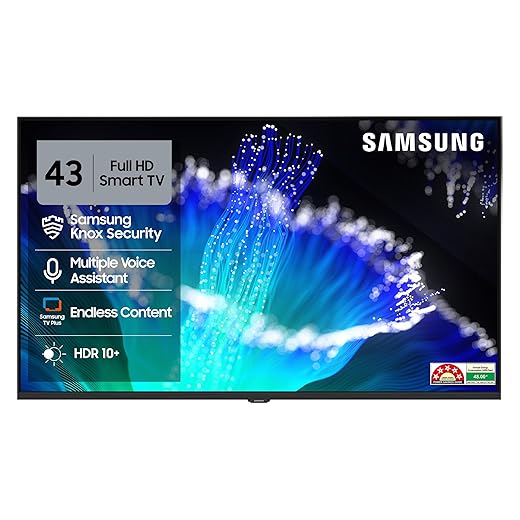
Your questions answered
Is 43-inch or 55-inch better for an Indian living room?
For most Indian living rooms where the sofa is 7-9 feet from the TV wall, 55-inch is the more comfortable and immersive choice. At that distance, a 43-inch screen can feel small for movies and sport. Reserve 43-inch for bedrooms, smaller rooms, or wherever the viewing distance is under 6 feet.
Is QLED worth the extra cost over standard LED?
In bright Indian living rooms with daylight coming through windows, yes — QLED’s higher peak brightness and wider colour gamut are visible in everyday use. If the room is used primarily in the evening with lights dimmed, the difference shrinks and a standard LED at the same price is harder to argue against.
Google TV vs Fire TV — which should I pick?
Google TV is the better default for most users due to its larger app library and longer support cycle. Choose Fire TV specifically if you are a heavy Prime Video or Alexa user, or already have Amazon Echo devices at home. Always confirm your daily apps — JioCinema, Hotstar, SonyLIV — are available on the platform before buying.
Is FHD enough or do I need 4K?
At 43-inch and 6 or more feet of viewing distance, FHD is adequate for most content including broadcast, YouTube, and standard streaming. 4K shows a meaningful advantage at 55-inch and above, or when sitting within 5 feet of the screen. If you plan to stream 4K HDR content regularly and sit close, the upgrade is justified.
Which brand has the best service network in India?
Samsung and Sony maintain the densest service networks across metros and tier-2 cities. Xiaomi has expanded significantly through Mi service centres and authorised third-party partners. VW and Philips coverage thins outside major cities — verify availability in your specific city before buying, particularly if you are in a tier-2 or tier-3 location.
Which TV should you buy?
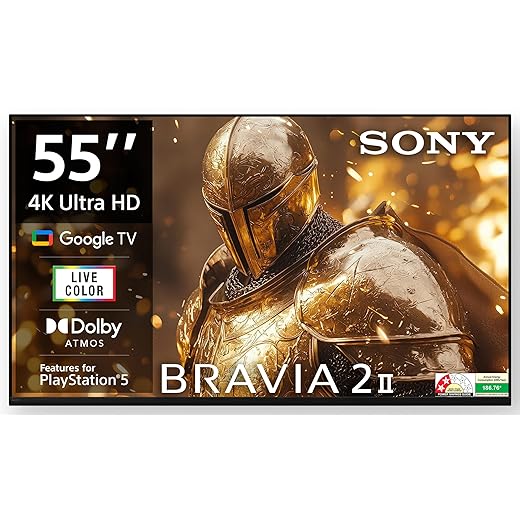
- Sony BRAVIA for the best overall picture and OS at 43-inch and 55-inch
- Philips 43PQT8100 for the best QLED value at 43-inch
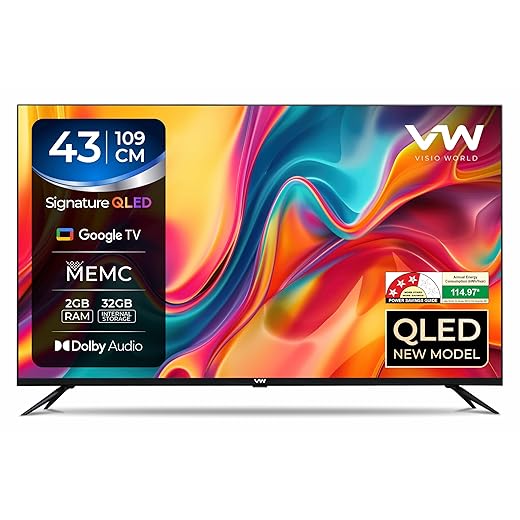
- VW VW55GQ2 for 55-inch QLED on a budget
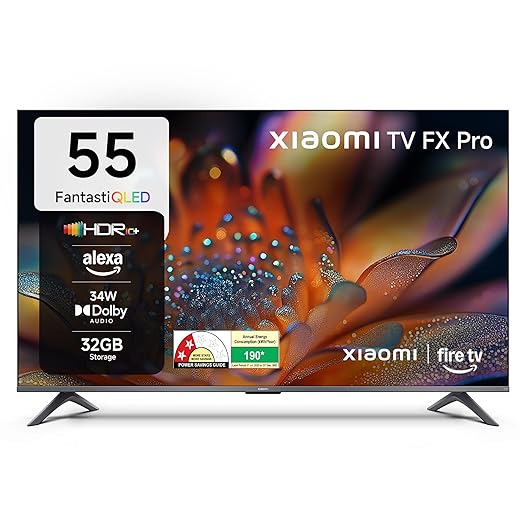
- Xiaomi FX Pro for 55-inch Fire TV with a QLED panel
- Samsung UA75UE85 for the best large-screen reliability and service coverage
Sony leads on picture quality and OS reliability at both 43-inch and 55-inch. Philips and VW deliver genuine QLED value for buyers who want better panel performance without the Sony price premium. Xiaomi covers the Fire TV segment well at both sizes. Samsung is the safest large-screen choice for buyers who need reliable service across India.




Comments 1